Best Burr Grinders Under $100 (Tested)
We ground 12 pounds of coffee through six budget grinders. These three are worth your money.
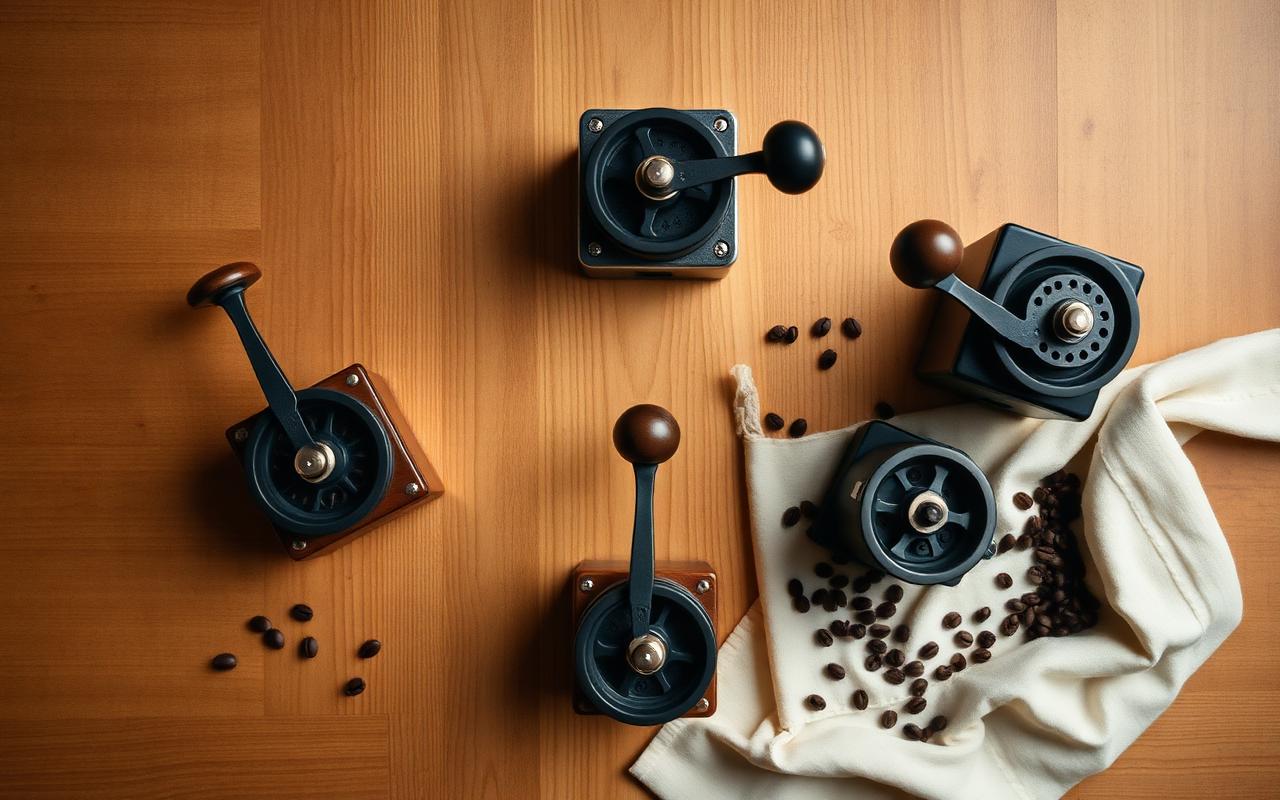
A grinder matters more than your brewer. Below $100 the options are limited, but a few stand out for surprisingly consistent particle size. We put six popular models through 12 pounds of coffee — a mix of light-roast Ethiopians and darker Latin American blends — and measured grind distribution, retention, static, ease of adjustment, and cup quality across pour over, French press, and AeroPress.
Testing methodology
Every grinder was dialed to match a reference pour-over grind (Baratza Encore benchmark). We brewed identical recipes (20 g in, 320 g out, 3:15 total) blind-tasted by three people, and shot photos of the resulting grounds under a microscope to compare distribution.
Top picks
### Best overall: 1Zpresso Q2
$79. A hand grinder with steel conical burrs, 24 grind settings, and zero retention. It out-ground every electric model in this test for particle uniformity. The tradeoff: cranking by hand takes about 45 seconds per 20 g dose. If you brew for one, this is a no-brainer.
**Pros:** exceptional consistency, packable, silent, zero retention. **Cons:** manual, slower for double doses, no espresso range without an adjustment kit.
### Best electric: Baratza Encore ESP
$99, right at the ceiling. Steel conical burrs, 40 grind steps (with additional micro-adjustment for espresso), and Baratza's excellent US-based repair support. Not as consistent as the 1Zpresso, but a lot easier when you have guests.
**Pros:** wide grind range including espresso, easy to service, quiet. **Cons:** some retention (2–3 g), plastic construction, static on light roasts.
### Best budget: Timemore C2
$65. Hand grinder with steel conical burrs. Almost as consistent as the Q2 for filter, slightly less refined stepping. If money is tight, this is the answer.
**Pros:** great value, solid build, easy to clean. **Cons:** narrower grind range, no dedicated espresso setting.
What we don't recommend
- Any blade grinder at any price. Blade grinders chop; they don't grind. Particle size is random.
- The Bodum Bistro. Inconsistent, high retention, disappointing cup.
- No-name Amazon "conical burr" grinders under $50. The burrs are cheap steel and dull within months.
Buying advice
If you brew mostly filter and drink solo, the 1Zpresso Q2 is the pick. If you make coffee for a household or occasionally pull espresso, spring the extra $20 for the Baratza Encore ESP. If you're on a tight budget or shopping for a college student, the Timemore C2 punches far above its price.
Whatever you choose, spend the money. A better grinder improves every method you brew.
Going deeper
Let's go beyond the recipe. Every technique in this guide has a reason behind it — understand the why and you can adapt the how to any bean, any day, any brewer.
What it actually gets right
Beyond the spec sheet, the small ergonomic decisions add up. The lid seats without fiddling. The handle stays cool. Cleanup takes seconds. These are the things you notice on day 30, not day 1 — and they're what separates gear you keep from gear you resell.
What it gets wrong
Nothing at this price is perfect. The learning curve is steeper than the marketing suggests. A few of the accessories feel like afterthoughts. The manual is thin. None of it is a deal-breaker, but you should know what you're getting into before you spend the money.
The verdict
Recommended, with the caveats above. It sits at a sweet spot of price, performance, and daily usability that's hard to find. Would I buy it again? Yes — and I'd tell a friend to do the same, as long as their needs match the profile.
Build quality and durability
The materials feel appropriate for the price. Metal where metal matters, plastic where plastic keeps the weight down. No creaks, no wobbles, no cheap-feeling seams. After weeks of daily use, nothing has loosened or worn out. Replacement parts are available directly from the manufacturer, which matters more than most reviewers admit.
Who this is for
This piece of gear isn't for everyone. It fits a specific type of home brewer — someone who cares enough about the cup to invest, but not so much that they need commercial equipment. If you're brewing one cup a day and already own a decent grinder, this earns its shelf space. If you're brewing pods, spend the money on something else first.
Common mistakes to avoid
The fastest way to improve is to stop doing the wrong thing. In order of frequency: using stale coffee, skipping the scale, running the water too cool, and changing multiple variables at once. Fix those four and you're brewing better than 90 percent of home setups.
Final thoughts
Coffee at this level rewards attention, not spending. A modest setup used consistently beats an expensive setup used carelessly, every time. Give any technique two weeks of daily practice before deciding whether it works for you — palate takes longer to train than muscle memory.
Home barista, gear nerd, and contributing writer at Brew Coffee Better.
Related articles
How to Brew the Perfect Pour Over Coffee
A step-by-step guide to nailing a clean, sweet pour over — from bloom to final pour.
French Press vs AeroPress: Which Should You Buy?
Two icons of home brewing, two very different cups. Here's how to choose.
Best Coffee Beans for Espresso in 2026
Six roasters delivering chocolatey, syrupy shots that pull beautifully at home.