How to Brew the Perfect Pour Over Coffee
A step-by-step guide to nailing a clean, sweet pour over — from bloom to final pour.
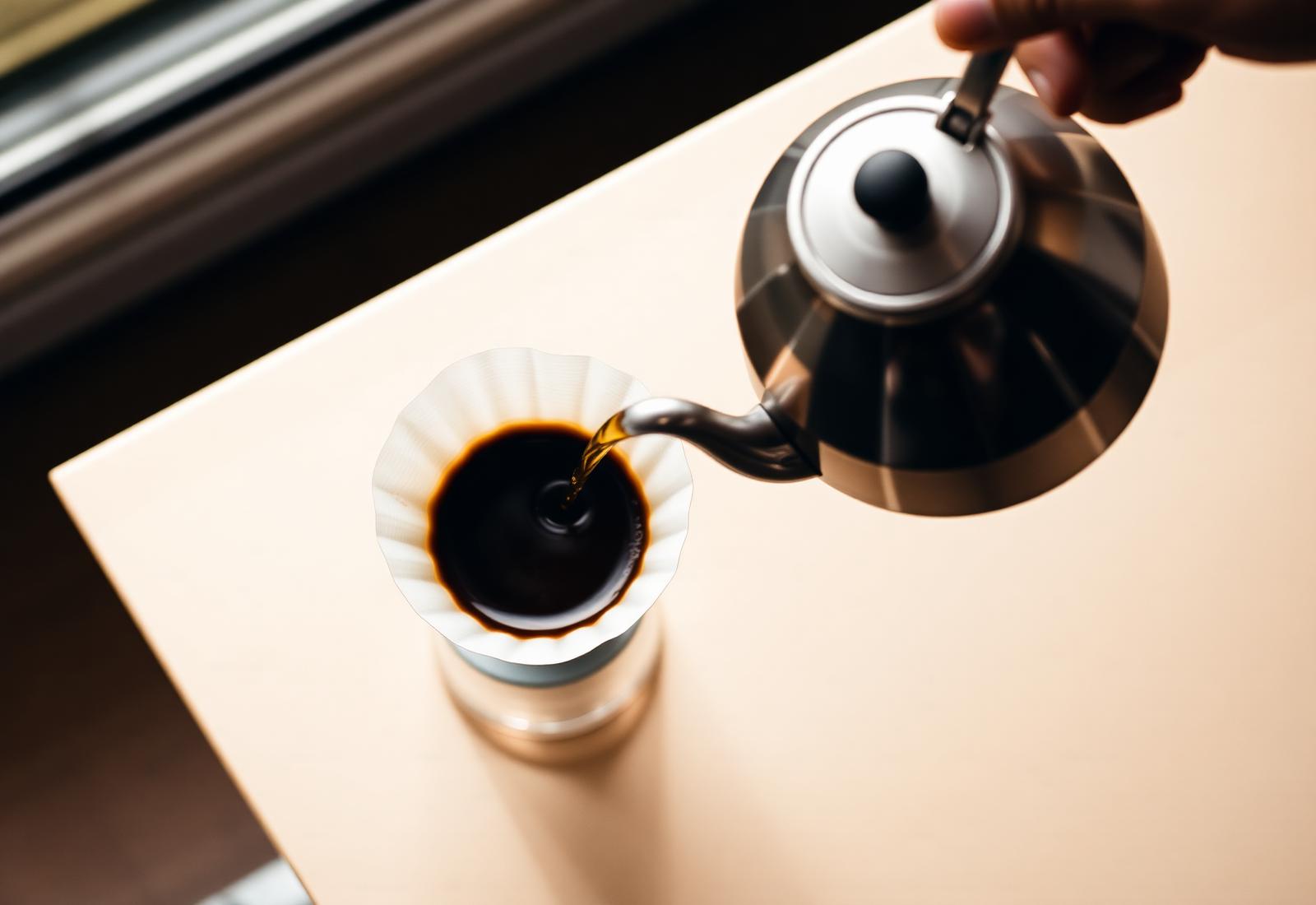
Pour over coffee is the cleanest way to taste a bean. With nothing but paper, water, and patience, you reveal the flavors a roaster spent months developing. It is also the brewing method most sensitive to technique — which is exactly why learning it makes every other brewer easier.
This guide walks through the exact recipe I use every morning on a Hario V60, plus the reasoning behind each variable so you can adapt when the bean, the roast, or the day changes.
The recipe at a glance
- 20 g of freshly roasted coffee
- 320 g of filtered water, 200 to 205 degrees Fahrenheit
- Medium-fine grind, roughly the texture of table salt
- Total brew time: 3:00 to 3:30
- Ratio: 1:16 water to coffee
Gear you actually need
You do not need a shelf of equipment. You need four things that work well together:
- A cone-shape dripper (Hario V60, Origami, or Kalita Wave)
- A burr grinder — even a hand grinder like the 1Zpresso Q2 outperforms any blade
- A gooseneck kettle for controlled pouring
- A scale that reads to at least 0.1 grams
Skip any one of these and consistency falls apart. The scale matters more than most beginners think — eyeballing coffee is the fastest way to a different cup every day.
Step by step
- Heat your water to 200 degrees Fahrenheit. Off-temp water is the single most common reason a brew tastes flat or sour. If you don't have a temperature-controlled kettle, boil the water and let it sit for 30 seconds.
- Rinse the paper filter. Pour hot water through the filter into the carafe. This removes papery taste and preheats your gear. Dump the water.
- Weigh and grind 20 grams of coffee. Add the grounds to the filter and give the dripper a gentle shake to level the bed.
- Start your timer and bloom. Pour 40 grams of water — twice the coffee's weight — in a spiral from the center out. Swirl the dripper gently. Wait 30 to 45 seconds. Fresh coffee will dome and bubble as CO2 escapes.
- First main pour. At 0:45, slowly pour to 160 grams total, keeping the stream small and centered.
- Second main pour. At 1:30, pour up to 240 grams.
- Final pour. At 2:00, pour up to 320 grams. Give the dripper one last gentle swirl to flatten the bed.
- Drawdown. The last drops should fall between 3:00 and 3:30. Remove the dripper, swirl the carafe, pour, and taste.
Reading the cup
Every pour-over teaches you something if you know what to listen for.
- Sour and thin: under-extracted. Grind finer, pour slower, or bump the water 2 to 3 degrees warmer.
- Bitter and dry: over-extracted. Grind coarser, pour a little faster, or drop the temperature.
- Muddy and heavy: your grinder is producing too many fines, or you agitated too aggressively. Try a gentler pour.
- Balanced and sweet: don't change a thing. Write it down.
"The best coffee in the world is the one you brewed thoughtfully this morning." — every barista, ever.
Small habits that matter
Weigh your coffee every single time. Rinse your filter every single time. Store beans in a sealed opaque container away from light. And drink the coffee within a month of the roast date printed on the bag — after that, aromatics fall off a cliff and no technique can bring them back.
Once this recipe feels boring, that is the moment to experiment: change one variable at a time, take a note, and taste the difference. That is how palates get built.
Going deeper
There's the version of this you can learn in five minutes, and there's the version that makes every cup better for the next ten years. This is the second one.
Pouring technique that actually matters
Pour in slow concentric circles from the center outward, then back. Keep the kettle spout two to three inches above the bed so the water enters gently instead of drilling a channel. Avoid pouring directly on the paper — grounds stuck to the wall don't extract. Pulse pouring (multiple small pours) gives you more control than a single continuous pour, especially on lighter roasts that need agitation to open up.
Water quality and temperature
Coffee is 98 percent water, so bad water guarantees a bad cup. Aim for 150 ppm total dissolved solids with a balanced calcium-to-magnesium ratio. Third Wave Water and Lotus Water Drops both make this trivial. Brew temperature belongs between 195 and 205 degrees Fahrenheit — hotter for dense light roasts, cooler for darker ones. A thermometer or a temperature-controlled kettle removes the guesswork entirely.
Dialing in grind size
Grind is the single biggest lever you have. Too coarse and the brew runs fast, tastes thin, and finishes sour. Too fine and it stalls, over-extracts, and turns bitter. Start medium-fine — roughly the texture of table salt — and adjust in small steps. If your total brew time lands under 2:45, tighten the grind two clicks. Over 3:45, open it up two clicks. Never change grind and ratio in the same session; you'll never know which variable moved the cup.
Reading the bed after brewing
The spent coffee bed tells you exactly what happened. A flat, even bed with a small dome in the center means uniform extraction. A crater or channel means water bypassed some of the grounds — usually caused by an aggressive pour or an uneven initial distribution. High walls of coffee stuck to the paper mean you didn't rinse the sides down enough. Take ten seconds to look before you rinse the dripper.
Common mistakes to avoid
The fastest way to improve is to stop doing the wrong thing. In order of frequency: using stale coffee, skipping the scale, running the water too cool, and changing multiple variables at once. Fix those four and you're brewing better than 90 percent of home setups.
Final thoughts
Coffee at this level rewards attention, not spending. A modest setup used consistently beats an expensive setup used carelessly, every time. Give any technique two weeks of daily practice before deciding whether it works for you — palate takes longer to train than muscle memory.
Frequently asked questions
What grind size should I use?+
Medium-fine, similar to table salt. Too fine and water can't drain, giving you a bitter over-extracted cup; too coarse and you'll get weak, sour coffee.
How much coffee per cup?+
Start at a 1:16 ratio — 20 grams of coffee to 320 grams of water — and adjust in 0.5-point increments. Stronger palates often prefer 1:15; lighter roasts often shine at 1:17.
Do I really need a gooseneck kettle?+
Yes, if you want consistency. The narrow spout lets you control flow rate, which dramatically affects extraction. A regular kettle dumps water too fast and channels through the bed.
Why does my coffee taste sour?+
Sourness almost always means under-extraction. Grind finer, use hotter water, or extend your pour time by 15 to 20 seconds and taste again.
Home barista, gear nerd, and contributing writer at Brew Coffee Better.
Related articles
French Press vs AeroPress: Which Should You Buy?
Two icons of home brewing, two very different cups. Here's how to choose.
Best Coffee Beans for Espresso in 2026
Six roasters delivering chocolatey, syrupy shots that pull beautifully at home.
Cold Brew Recipe for Beginners
Smooth, low-acid, ridiculously easy. The only cold brew recipe you'll ever need.