Flat vs Conical Burrs: The Grinder Geometry That Shapes Your Cup
Both are burrs. Both grind consistently. But they produce different-tasting coffee. Here's why.
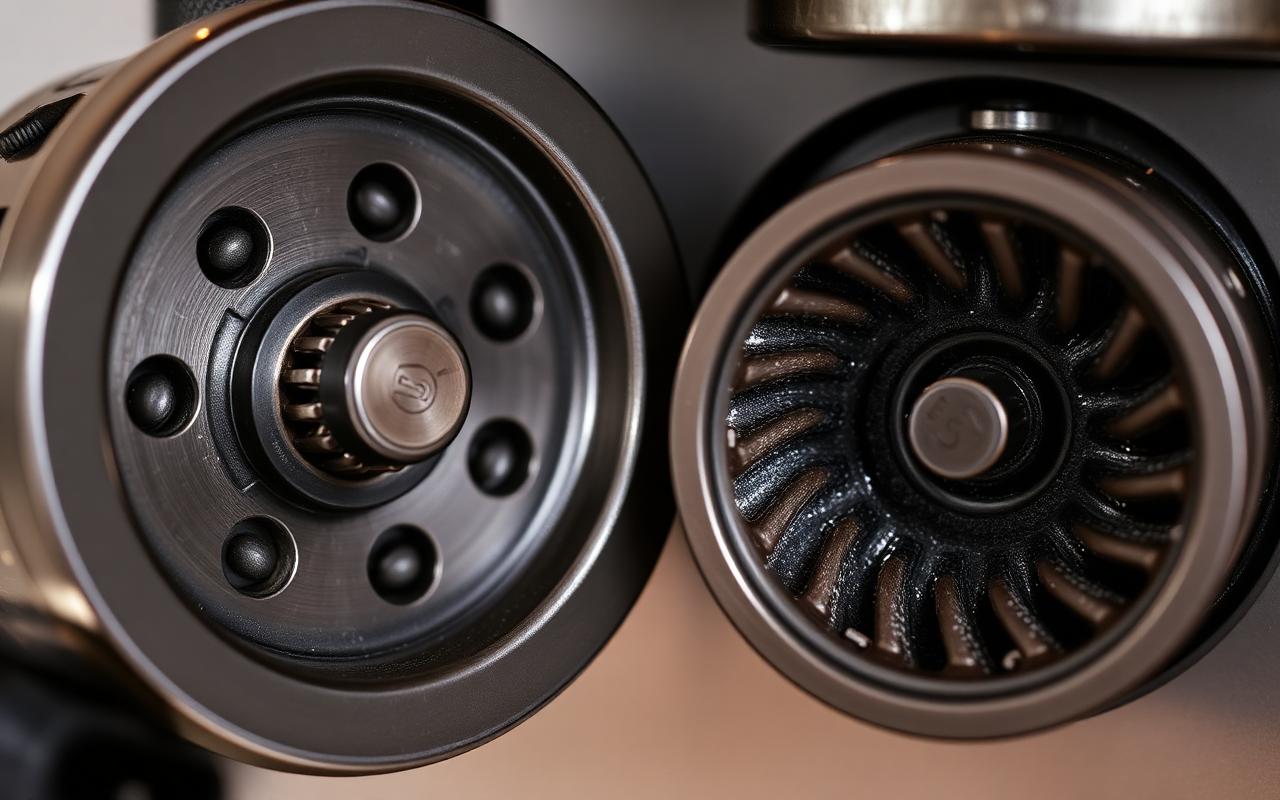
Two cone-shaped burrs that fit inside each other. Simpler, quieter, cheaper. Produce a slightly bimodal grind — some fines, some boulders — that gives a rounder, sweeter cup with more body.
Flat burrs
Two disc-shaped burrs facing each other horizontally. More expensive to manufacture. Produce a more uniform particle size, giving a cleaner, more separated flavor profile with better clarity.
Which to buy
Conical for espresso and daily use (body wins). Flat for filter coffee where you want to explore single origins. Or one of each, which is exactly what serious home baristas end up doing.
Going deeper
There's the version of this you can learn in five minutes, and there's the version that makes every cup better for the next ten years. This is the second one.
Flat versus conical burrs
Conical burrs produce a bimodal grind distribution (more variety of particle sizes) that some tasters find richer and more complex. Flat burrs produce a more uniform grind that emphasizes clarity and separation of flavors. For most home setups, either is fine — burr geometry matters far less than build quality and alignment.
When to upgrade
If you've spent money on beans and a brewer and the cup still doesn't sing, the grinder is almost always the ceiling. A great grinder makes a mediocre bean taste better. A great bean through a bad grinder still tastes bad. Prioritize this piece of gear over almost everything else.
Alignment and retention
Cheap grinders often ship with misaligned burrs, which means one side of the grind is finer than the other. You'll taste it as uneven extraction. Retention (coffee left inside the grinder between doses) matters for pour over — stale grounds from yesterday muddy today's cup. Single-dosing (weighing beans in, grinding all of it, weighing what came out) eliminates the problem.
Burr versus blade — no contest
Blade grinders chop coffee unevenly into a mixture of boulders and dust. That guarantees uneven extraction: the dust over-extracts and turns bitter, the boulders under-extract and taste sour. Burrs crush coffee between two ridged surfaces at a controlled distance, producing a uniform particle size. Every serious brew method requires a burr grinder.
Common mistakes to avoid
The fastest way to improve is to stop doing the wrong thing. In order of frequency: using stale coffee, skipping the scale, running the water too cool, and changing multiple variables at once. Fix those four and you're brewing better than 90 percent of home setups.
Final thoughts
Coffee at this level rewards attention, not spending. A modest setup used consistently beats an expensive setup used carelessly, every time. Give any technique two weeks of daily practice before deciding whether it works for you — palate takes longer to train than muscle memory.
Home barista, gear nerd, and contributing writer at Brew Coffee Better.
Related articles
How to Brew the Perfect Pour Over Coffee
A step-by-step guide to nailing a clean, sweet pour over — from bloom to final pour.
French Press vs AeroPress: Which Should You Buy?
Two icons of home brewing, two very different cups. Here's how to choose.
Best Coffee Beans for Espresso in 2026
Six roasters delivering chocolatey, syrupy shots that pull beautifully at home.