French Press Steep Time: 4 Minutes vs 8 Minutes
The internet argues about steep time. Here's what actually happens at each interval — and when to break the rules.
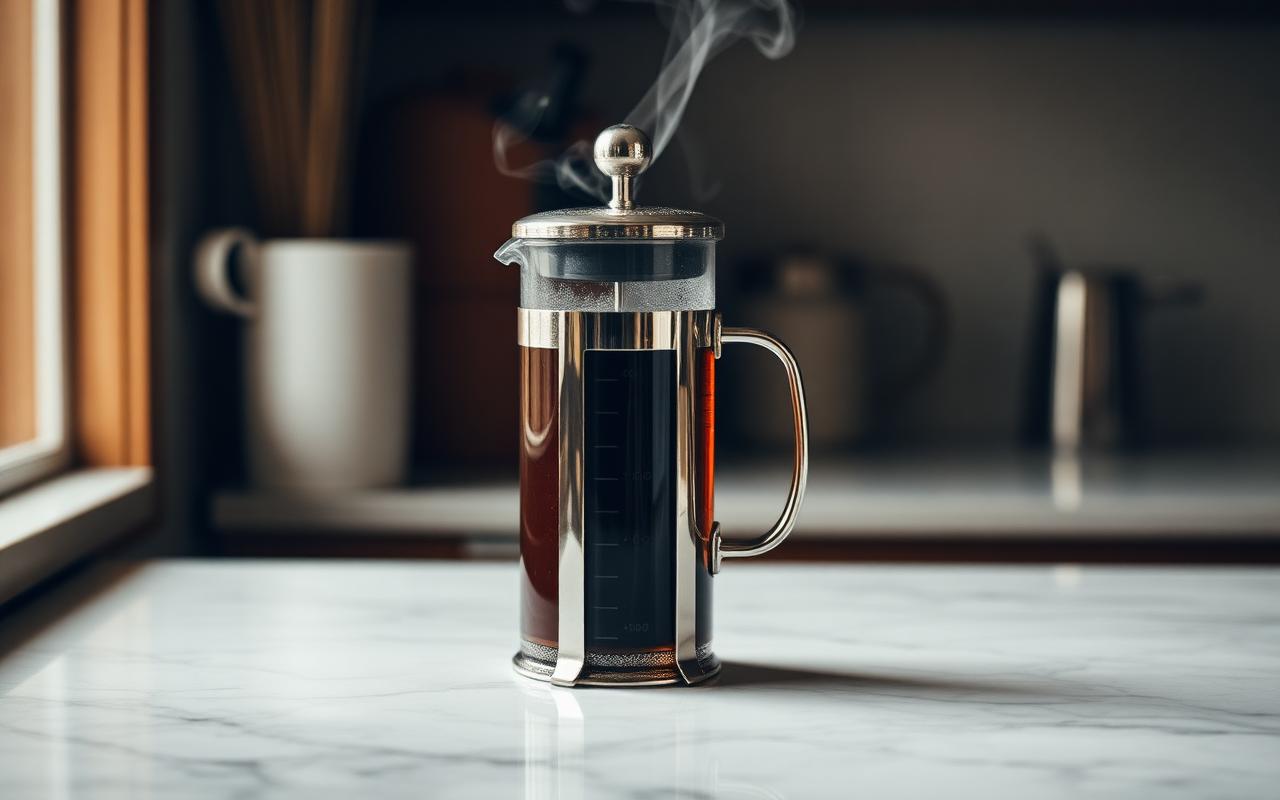
At four minutes, most coffees have extracted their sweet spot of solubles. This is the James Hoffmann standard and it works for 90% of medium roasts.
The 8-minute long steep
Some baristas add a second 4-minute rest after skimming the crust, letting grounds settle without extracting further (because they're no longer agitated). This produces an unusually clean cup — worth trying once.
When to shorten
Dark roasts and very fine grinds want 3 minutes or less. If the cup tastes bitter or ashy, shorten before you change anything else. Time is the fastest lever.
Going deeper
Let's go beyond the recipe. Every technique in this guide has a reason behind it — understand the why and you can adapt the how to any bean, any day, any brewer.
The crust break
At the four-minute mark, break the crust of floating grounds with the back of a spoon. Skim off the foam and any grounds that rise. This one step is the difference between a gritty press and a clean, silky cup. Then wait another minute before plunging — the settling time drops fines to the bottom.
The four-minute rule (and why to break it)
The classic recipe calls for a four-minute steep, but I've had better results at 4:30 to 5:00 with medium roasts and a slightly coarser grind. The extra minute pulls more sweetness without adding bitterness. If your press tastes muddy or astringent, coarsen the grind before shortening the steep.
Plunge slowly, decant fully
Press down in a slow, steady 20-second push. If you feel resistance, stop — jamming the plunger stirs up sediment. Decant immediately into a warmed carafe or mug. Leaving brewed coffee in contact with the grounds continues extraction and turns the cup bitter within minutes.
Immersion versus percolation
French press is a full-immersion brewer, which means every ground stays in contact with water for the entire brew. That's why grind size matters less here than in pour over — but coarser grinds still produce a cleaner cup with less sediment. Aim for the texture of coarse sea salt, not breadcrumbs.
Common mistakes to avoid
The fastest way to improve is to stop doing the wrong thing. In order of frequency: using stale coffee, skipping the scale, running the water too cool, and changing multiple variables at once. Fix those four and you're brewing better than 90 percent of home setups.
Final thoughts
Coffee at this level rewards attention, not spending. A modest setup used consistently beats an expensive setup used carelessly, every time. Give any technique two weeks of daily practice before deciding whether it works for you — palate takes longer to train than muscle memory.
Home barista, gear nerd, and contributing writer at Brew Coffee Better.
Related articles
How to Brew the Perfect Pour Over Coffee
A step-by-step guide to nailing a clean, sweet pour over — from bloom to final pour.
French Press vs AeroPress: Which Should You Buy?
Two icons of home brewing, two very different cups. Here's how to choose.

Best Coffee Beans for Espresso in 2026
Six roasters delivering chocolatey, syrupy shots that pull beautifully at home.